GUANGYUAN, SICHUAN, CHINA, October 26, 2026 /EINPresswire.com/ — What allows a heavy SUV or a high-performance sedan to feel remarkably responsive during tight cornering? Drivers often point to upgraded suspension dampers or stickier tires, but chassis engineers frequently look lower down at the unsprung mass sitting on the hubs. Shaving a few kilograms off a rotating wheel changes how quickly a suspension setup reacts to bumps and steering inputs. Achieving that structural reduction without compromising safety comes down to exact subtractive manufacturing. Evaluation of production standards at Guangyuan Anyu Aluminium Wheel Co., Ltd., (Syac), illustrates how an experienced lightweight forged wheels supplier from China manages tight mechanical tolerances during key machining stages, as highlighted in their technical wheel knowledge resources
Material Foundations: 6061-T6 Aluminum and Thermal Treatment
Subtractive computer numerical control machining requires a consistent, dense blank. The process begins with solid cylinders of aerospace-grade 6061 aluminum alloy. High-pressure forging presses subject these billets to thousands of tons of force, collapsing internal voids, refining the grain structure, and aligning the metal flow along the wheel contours.
Following initial forging, blanks undergo a precise T6 heat treatment sequence involving solution heat treatment and artificial aging. This thermal processing optimizes tensile strength and yield performance across the entire structure. Quality management standards require documented heat-treatment logs for each batch, establishing complete traceability before cutting tools touch the metal. Starting with an audited material foundation ensures predictable chip formation and prevents internal material stress from distorting the rim during high-speed metal removal.
Critical Control Points in CNC Wheel Machining
Converting a rough forged blank into a balanced wheel demands multi-axis milling and turning. Engineers at Syac focus on several vital operational parameters during this stage to prevent geometric errors from cascading through later steps.
Fixturing and Datum Point Alignment
Workpiece stability is essential. Custom pneumatic and hydraulic fixtures secure the forged blank at key contact points, preventing micro-flexing during aggressive roughing cuts. Machine operators establish absolute zero reference points on the hub mounting surface. Maintaining a consistent datum point ensures that front and rear geometry remains perfectly aligned relative to the central axis.
Dynamic Tool Path Compensation Strategies
Modern multi-spoke wheel profiles feature intricate geometry with varying pocket depths. Milling tools generate localized heat and experience deflection as cutting forces change across deep pockets. Tool path programming incorporates real-time offset compensation to adjust for cutter wear and thermal expansion. This control prevents wall thickness variations between individual spokes, safeguarding equal load distribution across the wheel structure.
Tolerance Management on Center Bores and Pitch Circle Diameters
The center bore and bolt pattern dictate how the finished wheel mates with the vehicle hub assembly. Tolerances for the center bore are kept within tight micron-level windows to guarantee a true hub-centric fitment. Radial variation or loose tolerances in bolt hole pitch circle diameters can introduce severe vibrations at highway speeds. Precise multi-axis drilling cycles maintain exact hole alignment, ensuring uniform lug nut clamping force.
Reference Surface Machining for Dynamic Balance
Unsprung weight reduction is counterproductive if the finished wheel suffers from weight imbalances. Machining processes establish perfectly concentric reference surfaces along the inner rim barrel and bead seats. Removing excess material evenly across these areas minimizes runout, reducing the reliance on heavy balance weights during final tire mounting.
Vehicle Fitment Applications and Field Performance
Achieving optimal wheel fitment across diverse vehicle platforms requires balancing aesthetic preferences with structural boundaries. Custom offset calculations and spoke profiles determine whether a wheel fits smoothly or interferes with under-chassis components. For passenger cars and performance sedans, reducing rotating mass near the hub provides cleaner steering feedback and sharper throttle response. Advanced CNC milling allows engineers to carve out generous backspacing pockets for high-performance brake calipers while maintaining structural rigidity across the wheel face.
In luxury crossover and SUV applications, heavy curb weights place substantial dynamic loads on the wheels during high-speed cornering and braking. Utilizing dense 6061-T6 forged blanks allows Syac to execute multi-spoke geometry capable of supporting heavy axle weight ratings without adding unnecessary bulk. Precise center bore tolerances maintain a direct hub-centric mounting surface, eliminating the steering wheel vibrations that often occur when using aftermarket hub-centric adapter rings.
Off-road vehicles and light trucks present a different set of technical demands, requiring high impact resistance alongside long-term durability on rough terrain. Precision turning processes produce robust bead flanges designed to hold tire beads securely under reduced operating pressures. Accurate offset engineering ensures that wide, aggressive tire setups sit flush within fender wells, preventing contact with suspension control arms and inner fender liners during full articulation.
Quality Control, Traceability, and Engineering Collaboration
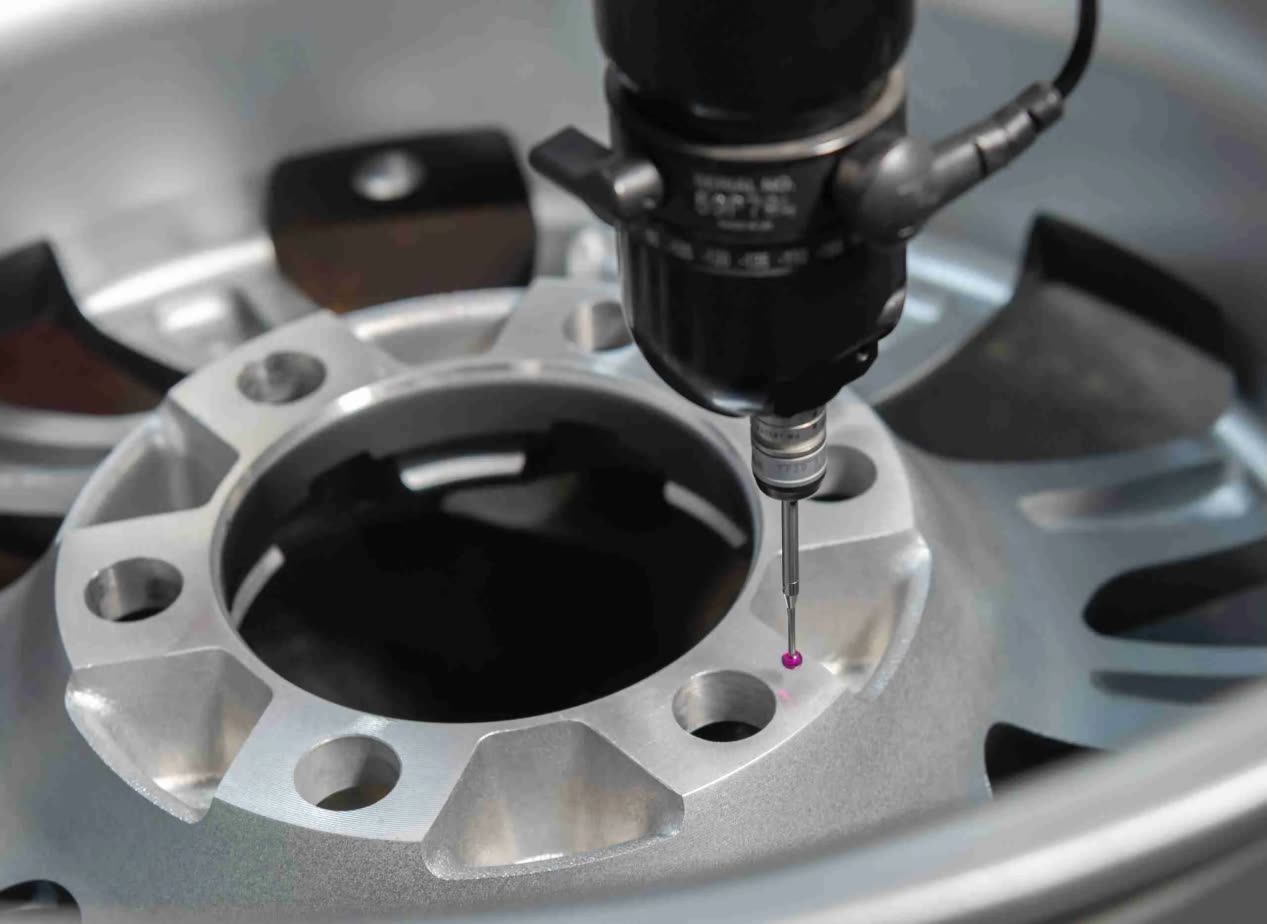
The long-term performance of lightweight forged wheels depends on systematic quality verification following mechanical processing. Completed wheels undergo rigorous dimensional inspections using automated coordinate measuring machines to verify pitch circle diameters, backspacing, and radial runout. Non-destructive testing protocols, including X-ray flaw detection and helium leak testing for tubeless rim structures, verify internal structural integrity.
As an established forged wheels supplier, Guangyuan Anyu Aluminium Wheel Co., Ltd. emphasizes technical documentation, complete material certifications, and reliable cross-border engineering communication. Technical teams work closely with international distributors and custom tuning brands, refining CAD models to match specific brake clearance requirements before production begins. Standardized production workflows and clear manufacturing documentation provide commercial partners with consistent quality control across small-batch runs and large commercial shipments.
Engineering precision remains the cornerstone of modern wheel manufacturing. By pairing certified material blanks with rigorous multi-axis machining controls, Syac continues to deliver high-performance wheel solutions that meet strict global fitment requirements.
To explore technical specifications or review current product options, visit the official company site at https://syacwheels.com/
Syac
Syac
Legal Disclaimer:
EIN Presswire provides this news content “as is” without warranty of any kind. We do not accept any responsibility or liability
for the accuracy, content, images, videos, licenses, completeness, legality, or reliability of the information contained in this
article. If you have any complaints or copyright issues related to this article, kindly contact the author above.

Media gallery