
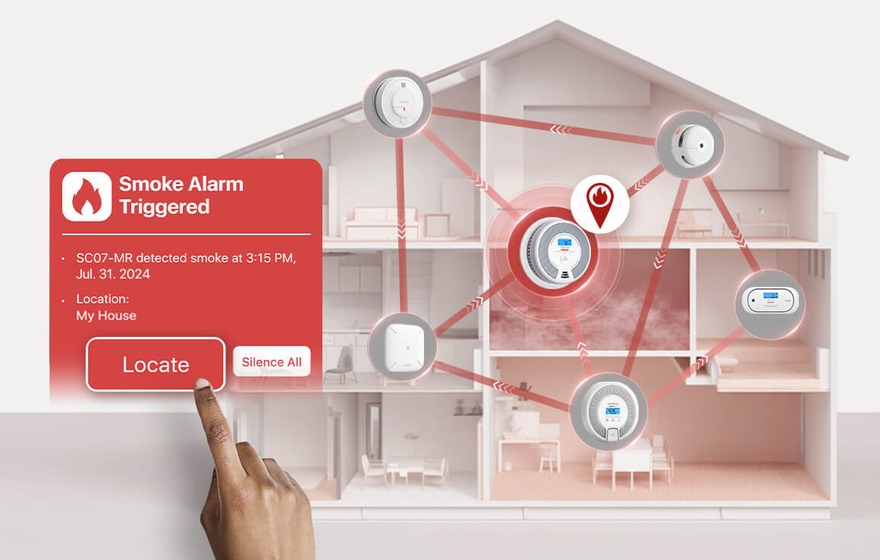
X-SENSE shares practical guidance on using smart safety devices as part of a home safety plan.
WILMINGTON, Del., Nov. 27, 2026 — X-SENSE is sharing practical guidance on using smart safety devices as part of a home safety plan. Smoke and carbon monoxide alarms can warn occupants about potential hazards, while connected features provide additional ways to receive alerts and check device status.
Choosing a device is only one step. Homeowners also need to consider where alarms are installed, how they communicate and what household members should do when a warning sounds.
Understand the Hazards That Need Detection
Smoke and carbon monoxide present different dangers. Smoke alarms detect smoke that may indicate a fire, while carbon monoxide alarms detect CO, a colorless, odorless gas produced when fuels burn incompletely. Potential sources include malfunctioning fuel-burning appliances, generators and vehicle exhaust.
A smoke and carbon monoxide alarm combines both detection functions in one device. Households still need enough alarms to cover the required locations throughout the home, with each unit installed according to its instructions.
Install Alarms Where They Are Needed
The U.S. Fire Administration (USFA) recommends smoke alarms inside every bedroom, outside each separate sleeping area and on every level of the home, including the basement.
The U.S. Consumer Product Safety Commission (CPSC) recommends CO alarms on every level and outside sleeping areas. Combination alarms should be positioned to meet the manufacturer’s instructions and applicable local requirements.
Homeowners should check the specified clearances from cooking appliances, bathrooms and ventilation outlets. Suitable placement helps limit nuisance alarms while maintaining the coverage the home needs.
Understand What Connected Alarms Can Do
Interconnected alarms allow compatible units to sound together when one detects a hazard. This can help make warnings audible across different rooms and floors.
X-SENSE SC07-MR smart smoke and carbon monoxide alarm uses a photoelectric smoke sensor and an electrochemical CO sensor. When paired with an SBS50 base station, it supports wireless interconnection and notifications through the X-SENSE Home Security app.
These notifications can report smoke, carbon monoxide, low battery levels, faults and test results. Shared app access allows more than one household member to receive updates.
Check Connectivity Before Installation
The SC07-MR requires the SBS50 base station for its app functions. The base station needs power and a compatible 2.4 GHz Wi-Fi network; it does not support a 5 GHz-only connection. Homeowners should confirm whether their selected package includes the base station.
Remote notifications also depend on internet access and correctly enabled app permissions. Setup should include checking device pairing and notification settings. An app notification supplements the audible alarm; occupants should respond immediately to an emergency warning without waiting for a phone alert.
Keep Testing and Replacement on Schedule
USFA recommends testing smoke alarms at least monthly, while the SC07-MR manual specifies weekly testing. Homeowners should follow the testing procedure for their model, clean alarms as directed and address low-battery or fault signals promptly.
The SC07-MR uses a replaceable CR123A lithium battery. X-SENSE lists a battery life of three to five years when connected to the base station, based on weekly testing, and a maximum alarm service life of 10 years from manufacture. These are separate timeframes; a fresh battery does not extend an alarm beyond its service life.
Devices that fail testing, reach their replacement date or issue an end-of-life warning should be replaced according to the manufacturer’s instructions.
Continue Everyday Fire and CO Prevention
Detection should be supported by everyday precautions. Residents should remain in the kitchen while cooking on the stovetop and turn off the burner before leaving. Towels, packaging and other combustible items should be kept away from the stovetop.
USFA advises keeping space heaters at least three feet from materials that can burn and switching them off before leaving the room or going to bed. Heating equipment and chimneys should receive a professional inspection and cleaning each year.
The Centers for Disease Control and Prevention advises operating portable generators outdoors, more than 20 feet from windows, doors and vents. Generators should never be used inside a home or garage, even when doors and windows are open.
Prepare Everyone to Respond
Households should identify two ways out of each room where possible, keep escape routes clear and choose an outside meeting place. The National Fire Protection Association recommends practicing the home fire escape plan twice a year. Plans should account for anyone who may need help leaving.
Residents who are deaf or hard of hearing may need purpose-built visual or vibrating alarm devices. Compatibility with the selected alarm system should be checked. Standard app notifications should not be treated as a substitute for suitable accessible alarms.
If a smoke alarm signals a fire, occupants should leave immediately, stay outside and call 911 from a safe location. They should not return for belongings.
If a CO alarm sounds, CPSC advises moving outside to fresh air immediately and contacting emergency services. Occupants should not stay inside to find the source or re-enter until emergency responders give permission.
Correctly installed devices, regular care and a practiced response plan help make smart safety technology a useful part of everyday home preparedness.
About X-SENSE
Founded in 2013, X-SENSE develops smoke alarms, carbon monoxide detectors, and environmental monitoring devices for residential use. The company reports that its products have reached more than 15 million households worldwide. Its product range includes standalone detectors, wireless interconnected alarms, and smart home safety devices designed to support household monitoring and early hazard detection.
Media Contact
Company Name: X-SENSE ELECTRONICS LLC
Contact Person: Martin
Email: partners@x-sense.com
Website: https://www.x-sense.com/
State/Country: Delaware, United States