AirGuard, the new plug-in carbon monoxide (CO) and combustible gas monitor from Primo Goods, displays live PPM readings starting at zero – giving U.S. homeowners continuous visibility into household air quality alongside their primary CO alarm.
NEW YORK CITY, NY / ACCESS Newswire / May 12, 2026 / Primo Goods, a U.S. home essentials brand, today announced the availability of AirGuard, a plug-in carbon monoxide and combustible gas monitor that displays real-time concentrations on a front-mounted digital screen starting at 0 parts per million (PPM).
Available now at primo-goods.com, AirGuard is designed as a supplemental indoor air monitor for U.S. households that want continuous visibility into carbon monoxide and combustible gas levels alongside their existing primary UL 2034-listed CO alarm.
Standard residential carbon monoxide detectors sold in the United States are designed to meet UL 2034, the life-safety standard that requires the alarm to sound only when CO concentrations reach approximately 70 PPM sustained over one to four hours.
Below that threshold, a conventional CO detector stays silent. Households exposed to lower, chronic levels of carbon monoxide may therefore receive no warning at all – even when symptoms of low-level CO exposure are already affecting occupants.
According to the U.S. Centers for Disease Control and Prevention (CDC), accidental carbon monoxide poisoning is responsible for more than 400 deaths and over 100,000 emergency department visits in the United States each year.
Carbon monoxide is colorless, odorless, and tasteless. Symptoms of low-level CO exposure – including persistent headaches, fatigue, nausea, dizziness, and difficulty concentrating – are frequently mistaken for the flu, seasonal allergies, or general tiredness, which means low-level carbon monoxide exposure can continue undetected for hours or days.
The National Fire Protection Association (NFPA) recommends replacing residential carbon monoxide alarms every five to ten years, depending on each manufacturer’s stated sensor life.
CO sensors degrade gradually even when the device continues to power on normally. Pressing the “test” button on a typical UL 2034-listed alarm verifies only the alarm circuit and battery – it does not test the integrity of the electrochemical sensor inside.
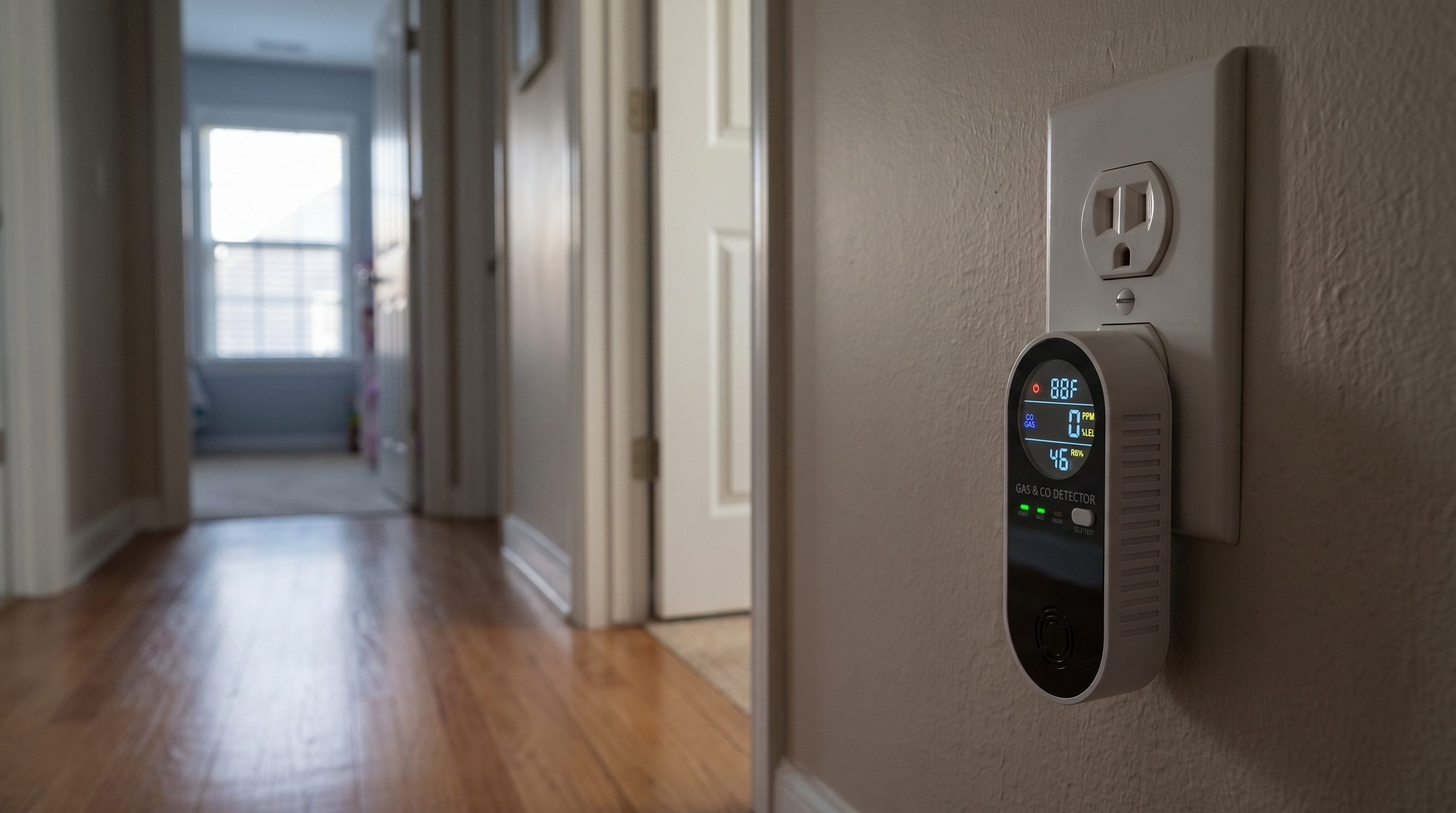
AirGuard, the new plug-in carbon monoxide monitor from Primo Goods, addresses these gaps by providing continuous numeric readings of CO and combustible gas concentrations on a clear front-mounted digital display, beginning at 0 PPM rather than 70.
The unit plugs directly into any standard 90 to 240-volt wall outlet and contains a built-in electrochemical sensor with a manufacturer-stated service life of five to ten years.
In addition to gas detection, AirGuard also reports ambient temperature and humidity, and emits an 85-decibel audible alarm when readings exceed safe thresholds.
How AirGuard Differs From a Primary UL 2034 Carbon Monoxide Alarm
Primo Goods positions AirGuard as a supplemental monitoring device intended for use alongside a UL 2034-listed primary CO alarm – not as a replacement for one.
Unlike a primary carbon monoxide alarm, which is engineered to detect dangerous, sustained concentrations of CO and trigger an audible alert at a regulated threshold, AirGuard is designed to show U.S. homeowners exactly how much carbon monoxide and combustible gas is present in their indoor air at any given moment, including at levels well below 70 PPM.
This continuous visibility allows households to identify trends, troubleshoot venting issues in gas appliances such as ranges, water heaters, and furnaces, and recognize early patterns that a binary life-safety alarm is not designed to communicate.
“The 70 PPM threshold is a life-safety standard, not a health standard. Most homeowners don’t realize their alarm is a black box that only speaks during an emergency. AirGuard puts the number on the wall – so people can see, not guess, how their home’s appliances and ventilation are performing.”
– Jon D., Press and Spokesperson for Primo Goods
Demand for real-time indoor air quality monitoring in the United States has grown alongside changes in U.S. residential construction. Newer American homes are significantly more airtight than older houses, which can cause combustion byproducts and indoor pollutants to linger longer than natural ventilation in older, draftier homes once allowed them to dissipate.
Gas ranges, gas furnaces, water heaters, fireplaces, generators, and attached garages are all common household sources of low-level carbon monoxide infiltration in modern U.S. homes.
Key Features of AirGuard from Primo Goods
-
Real-time digital display of carbon monoxide (CO) concentration starting at 0 PPM
-
Real-time digital display of combustible gas concentration
-
Live ambient temperature and humidity readings
-
85-decibel audible alarm when CO or gas readings exceed safe thresholds
-
Plug-in design compatible with any standard 90 to 240-volt U.S. wall outlet
-
Built-in electrochemical sensor with a manufacturer-stated service life of 5 to 10 years
-
100-day return window on unused units
-
Lifetime warranty covering first-use manufacturing defects
Availability
AirGuard is available now in the United States, sold direct-to-consumer through primo-goods.com.
The Primo Goods website hosts full product specifications, installation guides, and customer support documentation. U.S. customers can order AirGuard directly at primo-goods.com.
Frequently Asked Questions: AirGuard and Carbon Monoxide Monitoring
Q: Is AirGuard a replacement for a primary UL 2034 carbon monoxide alarm?
A: No. AirGuard from Primo Goods is a supplemental real-time CO and combustible gas monitor, not a UL 2034-listed life-safety device. Primo Goods recommends installing AirGuard alongside a code-compliant primary carbon monoxide alarm, not in place of one.
Q: Why doesn’t my existing carbon monoxide alarm beep at lower CO levels?
A: UL 2034, the U.S. safety standard for residential CO alarms, requires the alarm to activate only when carbon monoxide concentrations reach approximately 70 PPM sustained over one to four hours. The standard is designed to alert occupants to acute, dangerous exposure – not to detect low-level chronic carbon monoxide exposure.
Q: Where should I plug in a real-time carbon monoxide monitor?
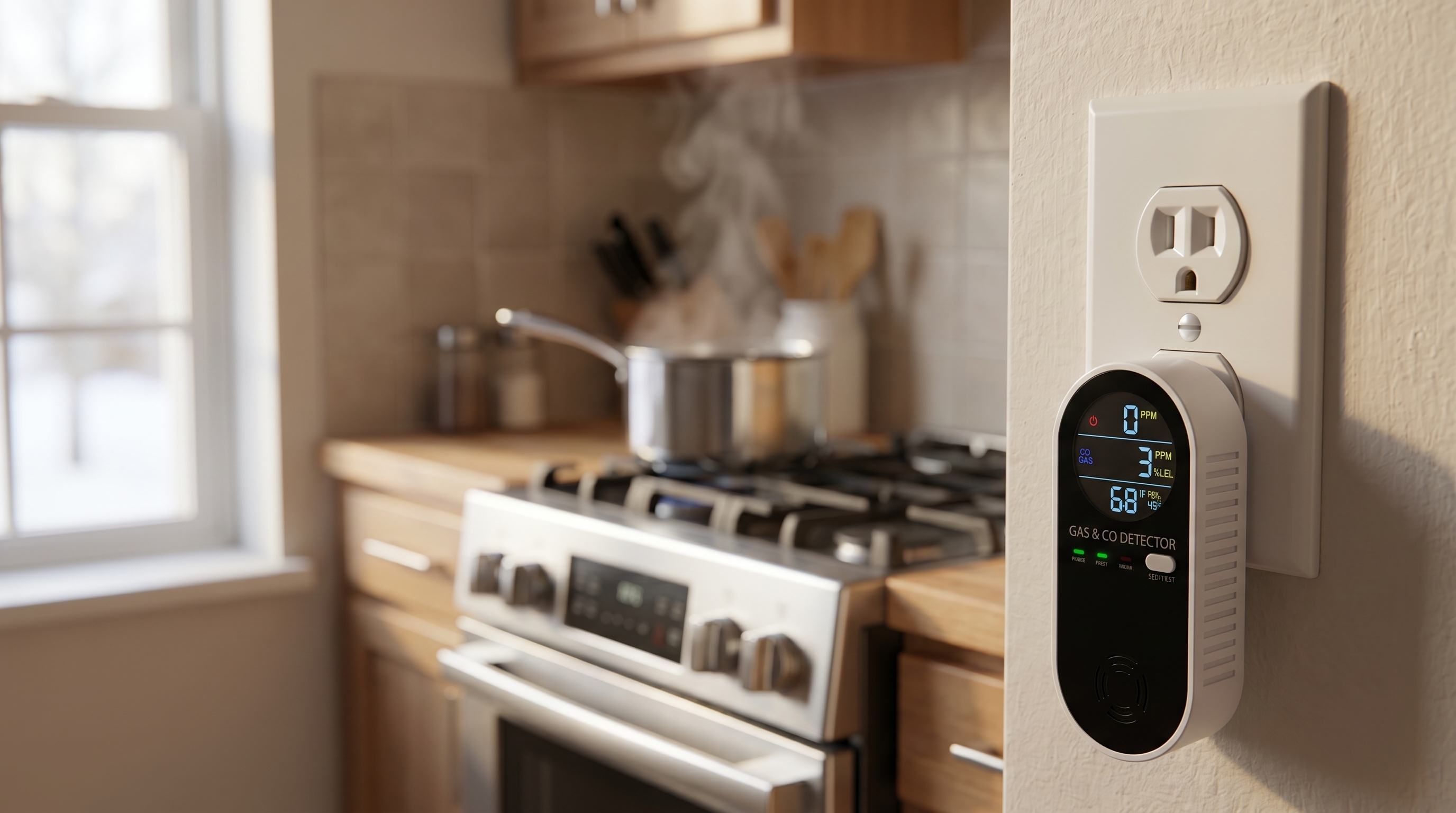
A: Common placement areas for a plug-in CO monitor include hallways near sleeping areas, kitchens with gas appliances, utility rooms containing water heaters or furnaces, and rooms adjacent to attached garages. Households should always follow local fire codes and NFPA placement guidelines for primary CO alarms.
Q: How long does a carbon monoxide sensor last?
A: According to the National Fire Protection Association (NFPA), residential carbon monoxide alarms should be replaced every five to ten years, depending on manufacturer specifications. AirGuard’s built-in electrochemical sensor carries a manufacturer-stated service life of five to ten years.
Q: Does AirGuard detect natural gas and propane as well as carbon monoxide?
A: Yes. AirGuard is a combined carbon monoxide and combustible gas monitor, designed to display live readings of both CO and combustible gas concentrations on the same digital screen.
Q: Where can I buy AirGuard?
A: AirGuard is available direct-to-consumer in the United States at primo-goods.com, which also provides product specifications, installation guides, and customer support resources.
About Primo Goods
Primo Goods is a U.S. home essentials brand operating online at primo-goods.com. The company’s flagship product, AirGuard, is a plug-in carbon monoxide and combustible gas monitor designed for residential use in U.S. households. Primo Goods publishes product specifications, installation guides, and customer support resources at primo-goods.com.
Safety Notice
AirGuard is a supplemental indoor air monitor and is not UL 2034 listed. It does not replace a primary, UL-listed carbon monoxide alarm. U.S. households should follow local fire codes and the National Fire Protection Association’s recommendations regarding primary CO detection.
If a carbon monoxide alarm of any kind activates in your home, occupants should immediately move to fresh air and call 911.
Media Contact
Jon D., Press and Spokesperson
Primo Goods
Email: press@primo-goods.com
Phone: +1 (646) 980-6696
Web: primo-goods.com
Editorial Assets
High-resolution lifestyle photography, product images, and the Primo Goods brand logo are available for editorial use. Files can be downloaded directly from primo-goods.com or requested through the media contact listed above. Editors are welcome to request additional lifestyle imagery, product photography, or interview availability.
SOURCE: Primo Goods
View the original press release on ACCESS Newswire