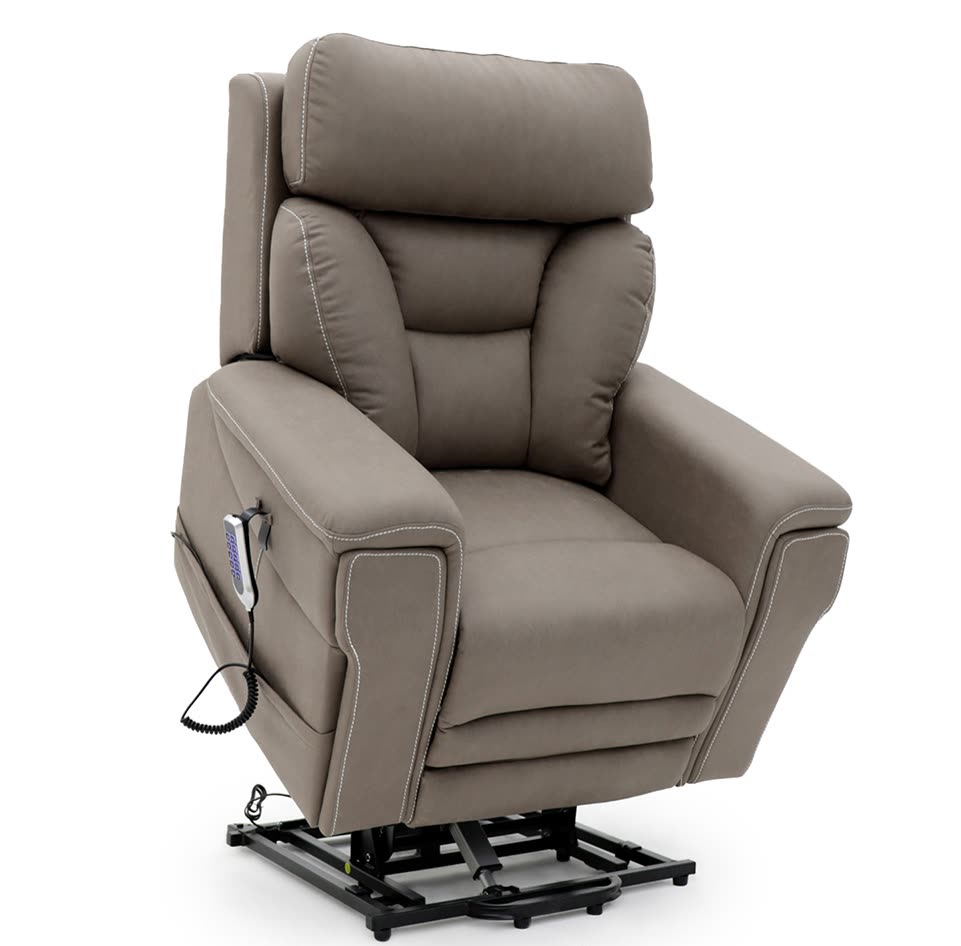
HUZHOU, ZHEJIANG, CHINA, November 16, 2026 /EINPresswire.com/ — In clinical settings and specialized care facilities, patient positioning significantly influences physical recovery, pressure distribution, and long-term comfort. Modern medical environments require specialized seating engineering that goes beyond basic furniture design to support frail or mobility-impaired individuals safely and effectively. Within this specialized manufacturing sector, Anji Jikeyuan Furniture Co., Ltd. has established a strong reputation as a trusted premium zero gravity lift recliner chair supplier, bridging advanced ergonomic engineering with rigorous institutional medical standards. This analysis explores the technical and operational factors that distinguish modern medical seating manufacturing and define the core competencies required for clinical-grade seating production across global markets.
Q1: What Is the Definition of Zero Gravity Posture in Clinical Scenarios?
The zero gravity posture is not merely a reclined seating position or a standard comfort adjustment. Originating from aerospace ergonomic studies and adapted for clinical applications, true zero gravity alignment involves elevating the lower extremities above the level of the heart while properly supporting the lumbar region and cervical curve. This specific anatomical alignment distributes body weight evenly across the entire surface of the chair, significantly reducing peak pressure on the ischial tuberosity and mitigating the severe risk of pressure ulcers among individuals with limited mobility or prolonged bed rest requirements.
In institutional healthcare environments, precise postural adjustments are essential for circulatory enhancement, edema reduction, and respiratory function improvement. Advanced seating systems incorporate multi-motor configurations to achieve this balance smoothly without creating friction against delicate skin tissues. Furthermore, specialized clinical models often integrate a Trendelenburg tilt function, allowing professional caregivers to execute short-term postural management procedures safely within the same seating unit. This capability minimizes manual patient transfers, reducing physical strain and injury risks on nursing staff while optimizing overall clinical outcomes.
Q2: What Clinical Demands Are Resolved by the Five-Motor Configuration?
Standard recliners generally utilize single or dual motors to adjust the backrest and footrest simultaneously, which frequently introduces sliding forces and mechanical shear stress on the user’s fragile skin and underlying tissue. To resolve this significant clinical challenge, sophisticated medical chairs deploy advanced five-motor configurations. These independent motors govern the backrest, footrest, headrest, and lumbar support with precision, while the fifth motor drives the entire mechanism rotationally to maintain a consistent, unchanging hip-to-knee angle during movement.
Maintaining a stable hip-to-knee angle prevents the patient’s body from sliding forward during elevation, thereby eliminating harmful mechanical shear forces entirely. Operational efficiency is equally critical in busy healthcare facilities where time and accuracy matter. Contemporary seating units utilize intuitive LCD hand controls capable of storing multiple preset positions for different care routines. Caregivers can instantly recall specific configurations for resting, feeding, or standing assistance with a single touch, ensuring consistent patient positioning across different shifts and varying nursing personnel.
Q3: What Requirements Exist for Motor Noise in High-Frequency Usage Scenarios?
Aged care facilities, hospitals, and rehabilitation centers operate on continuous, round-the-clock schedules, requiring every piece of equipment to function reliably without causing auditory disturbance. High-frequency usage demands robust internal framing and high-durability actuation components that withstand constant deployment. Industrial manufacturing standards require the careful selection of certified silent linear actuators capable of minimizing startup torque noise and eliminating mechanical hesitation or sudden jerks. Sudden mechanical movements can startle vulnerable patients or aggravate existing joint discomfort, making smooth acceleration and deceleration profiles essential for clinical acceptance and patient peace of mind.
Power reliability represents another critical operational parameter in institutional healthcare settings. Continuous-use medical seating includes integrated battery backup systems designed to ensure that positioning functions and lift-assist mechanisms remain fully operational during unexpected power interruptions or facility grid failures. By decoupling seating adjustments from complete reliance on the electrical supply, facilities maintain uninterrupted patient care standards and emergency safety protocols at all times.
Q4: How Is the Massage Function Handled on the Medical End?
Integrated features such as targeted vibration massage and localized thermal therapy offer recognized comfort benefits in general wellness applications, yet they require careful technical evaluation within strict clinical environments. Multi-zone vibration or rolling massage modules often utilize magnetic attachment systems or integrated electronic controls to function effectively. Technical documentation for advanced institutional models notes that magnetic components can potentially interfere with sensitive medical implants such as cardiac pacemakers and other electronic life-support devices.
Consequently, healthcare projects frequently require modular customization where therapeutic massage elements are treated as optional configurations rather than default specifications. Flexibility in manufacturing allows institutional procurement teams to adapt seating specifications precisely to the specific clinical profile of the target patient population, ensuring absolute safety compliance in specialized healthcare installations without compromising therapeutic utility.
Q5: What Standards Measure a Premium Supplier?
Evaluating manufacturing capability requires a comprehensive examination of production infrastructure, material traceability, and regulatory compliance protocols. Established production facilities maintain large-scale manufacturing floors with high monthly output capacities, enabling reliable fulfillment of large-scale public tenders and long-term supply contracts. Vertical integration, including in-house steel frame fabrication and rigorous component testing protocols, ensures strict quality control over every structural assembly from raw material to finished product.
Compliance with international regulatory frameworks is mandatory for medical-grade distribution. Standard manufacturing documentation aligns with CE directives including Radio Equipment, Low Voltage, and Electromagnetic Compatibility, alongside Medical Device Regulation classifications for Class I products. This stringent compliance pathway reflects the operational maturity required to meet the rigorous procurement standards demanded by public healthcare networks and international senior care groups. Additional material specifications, such as hydrolysis-resistant organic silicone upholstery, ensure long-term durability and straightforward sanitation in demanding clinical environments.
For further information regarding manufacturing capabilities and institutional product specifications, please visit https://www.jkyliftchair.com/
Geeksofa
Geeksofa
Legal Disclaimer:
EIN Presswire provides this news content “as is” without warranty of any kind. We do not accept any responsibility or liability
for the accuracy, content, images, videos, licenses, completeness, legality, or reliability of the information contained in this
article. If you have any complaints or copyright issues related to this article, kindly contact the author above.

Media gallery